
On my recent trip to Japan, I asked the concierge at my hotel in Japan if the spa had a “hot tub.” Despite her excellent English, the phrase didn’t land. I tried other words—“Jacuzzi,” “hot bath”—but nothing bridged the gap between us. The word I was searching for was ofuro.
What is a Japanese Ofuro?
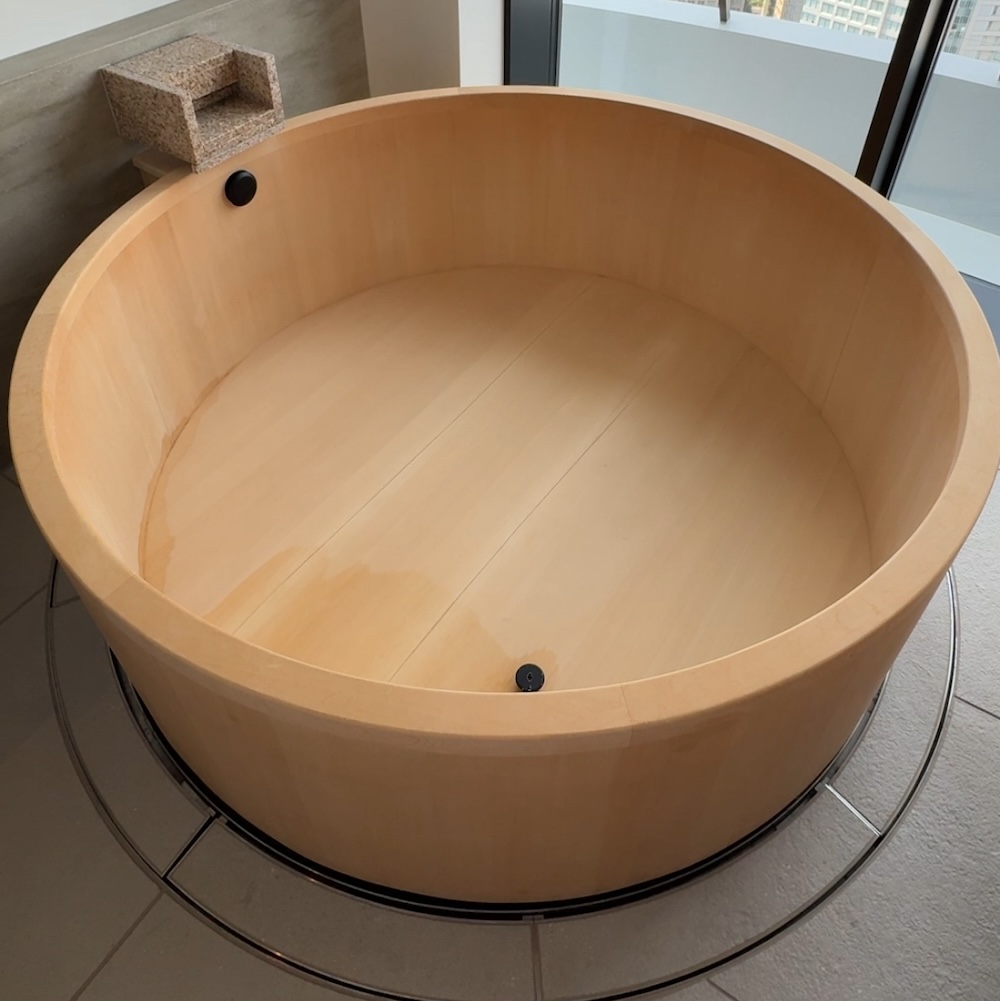
A Japanese ofuro is deep and compact tub, built for one person to sit upright, knees hugged in, shoulders cloaked in steaming water.
Unlike the long, shallow baths of the West, the ofuro is traditionally carved from aromatic hinoki cypress. Today, you’ll find them made of sleek acrylic or stainless steel tucked into the quiet corners of ryokan inns and minimalist Tokyo apartments alike.
A Japanese Ofuro Ritual
The ofuro is for soaking, not bathing. Families often share the same bathwater, a practice made possible by this pre-soak purification.
Step 1: Prepare the Space
Dim the lights. Light a stick of Japanese incense—sandalwood or yuzu are classic—or a beeswax candle. Set out a fresh yukata (cotton robe) or a soft towel nearby. This is your sanctuary now.
Step 2: Cleanse the Body, Calm the Mind
Before entering the ofuro, wash your body thoroughly. Use a soft cloth, gentle soap, and warm water to rinse. In Japan, this is done seated on a stool near the tub with a handheld shower. Be intentional. This is where the ritual begins.
Step 3: Fill the Tub
An authentic ofuro is deep and hot—ideally around 104–108°F (40–42°C). If you’re using a Western bathtub, fill it as high and hot as safely possible. Add a few drops of hinoki essential oil, or slip in a yuzu fruit in winter or green tea bagsfor antioxidant-rich water. Let the scent rise.
Step 4: Enter Slowly and Soak Completely
Step in carefully. Sit upright. Let the water cover your shoulders. Close your eyes. Breathe in for four counts, out for six. Your only job here is to be.
Optional Enhancements:
- Sip a small glass of barley tea or infused water to stay hydrated.
- Play soft ambient sounds: rainfall, distant temple bells, or silence.
- Place a cold compress or jade roller in the fridge to apply to your face mid-soak for a temperature contrast.
Step 5: Emerge Gently
Stay for 15–20 minutes, or until your body feels like butter and your thoughts have quieted. Step out slowly. Wrap yourself in something light. Don’t rinse—let the oils linger on your skin.
Step 6: Aftercare
Moisturize with a body oil—camellia, sesame, or rice bran. Brush your hair slowly. Sit by a window or lay down. Let the ritual continue in your stillness.
A Brief Timeline of the Ofuro
People in Japan have used ofuro-style baths for over 1,000 years, with roots tracing back to the 6th–8th centuries, when Buddhism and ritual bathing practices were introduced from China and Korea.
- 6th–8th Century (Asuka & Nara Periods):
Bathing became more widespread in Japan alongside the spread of Buddhism, which emphasized purification. Communal steam baths (yudono) and natural hot springs (onsen) were used, often at temples. - Edo Period (1603–1868):
The concept of individual or family wooden soaking tubs—the true ancestors of the modern ofuro—became common in urban homes. Public bathhouses (sento) also flourished during this time. - Modern Era (Late 19th Century–Today):
As indoor plumbing evolved, the private ofuro became a fixture in Japanese households. Contemporary ofuro may be made from hinoki wood, stone, stainless steel, or acrylic, but the ritual remains deeply rooted in daily life.